Quilters love to play with blocks! Not the wooden cubes of our childhood– but those squares of fabric cut and combined with other squares to create a quilt top or the square made up of little cut shapes that create a pattern that will be repeated over and over to create a quilt top.
The most basic quilt block is a simple square–and it is a very good place to start your creative endeavor.
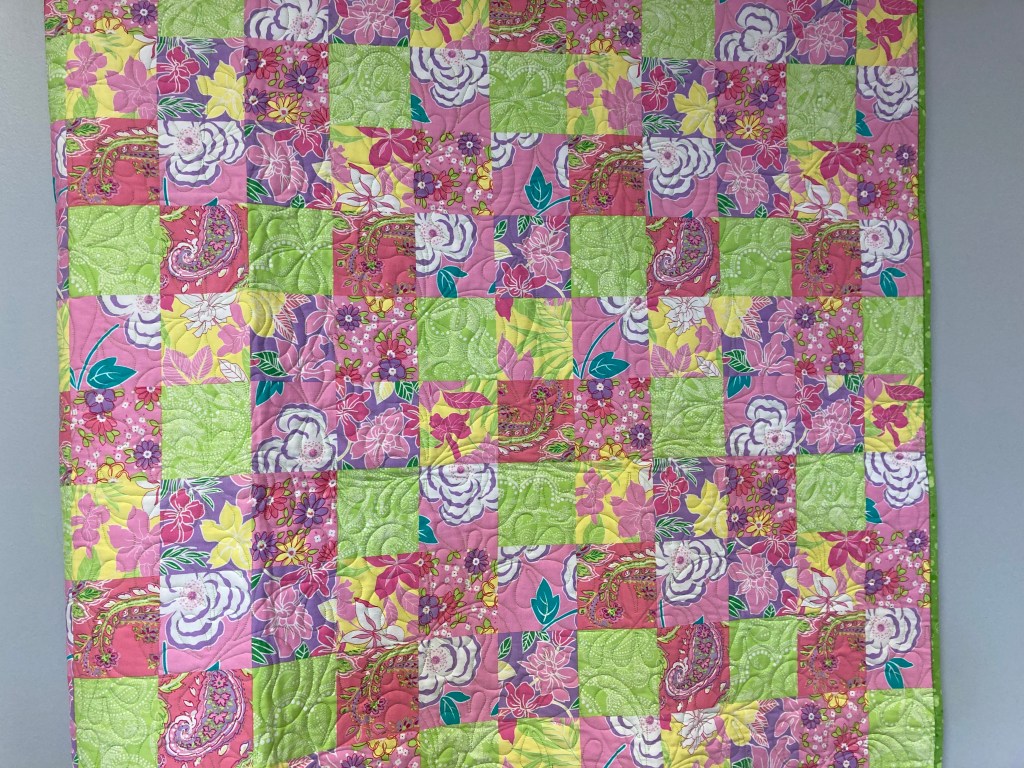
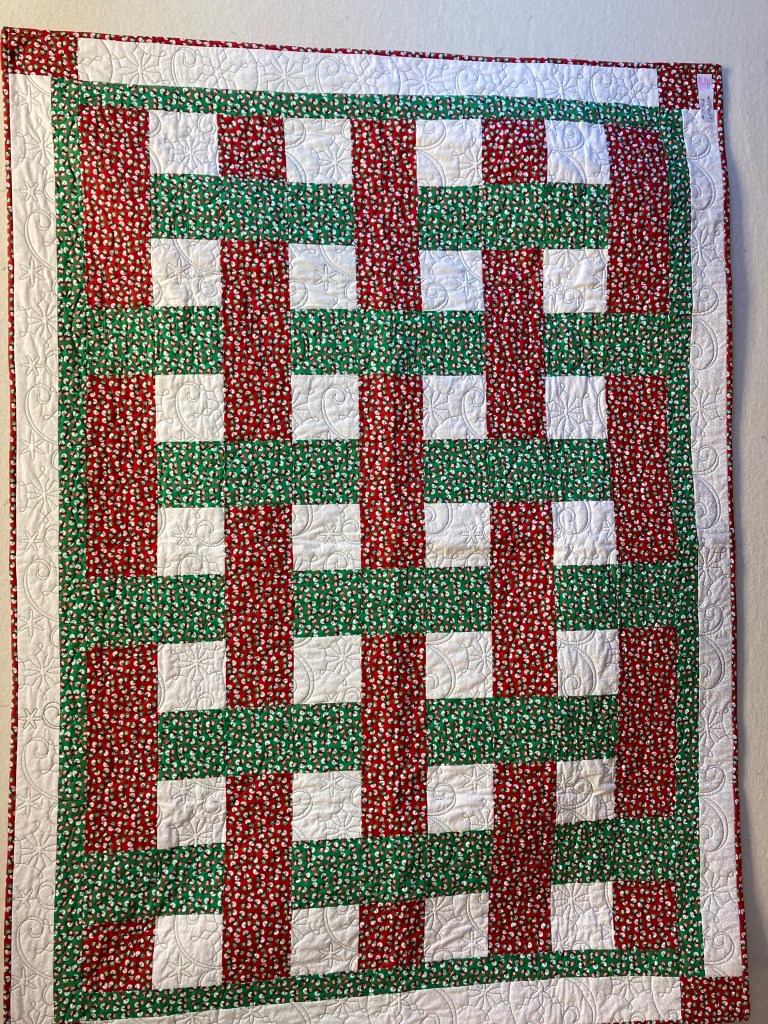
Any number of “looks” may be made using different color and prints depending on the arrangement of the blocks
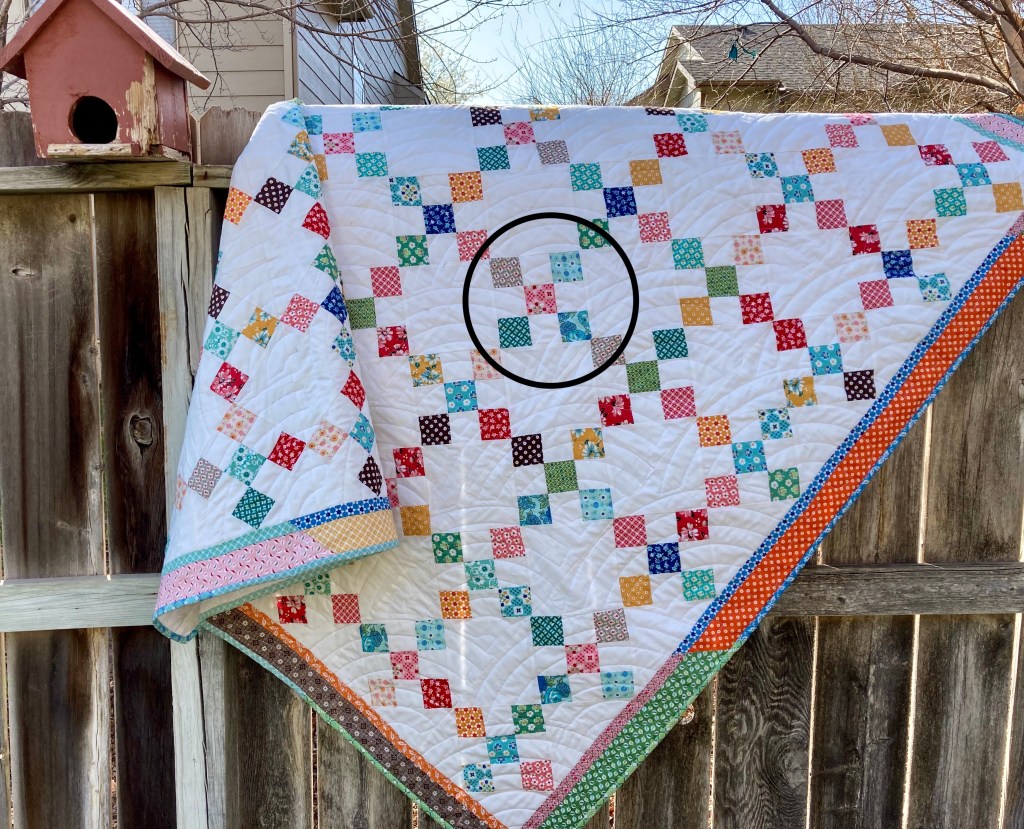
Nine-patch, cousin to the Four-patch, is made by alternating squares. This Nine-patch is set “on point”, another trick to add interest.
The quilt measures 65″ x 73″. $250
But why do something simple? Quilters like to manipulate small squares, rectangles, triangles, wedges and even circles into designs more complicated and perhaps more interesting. Quilters identified the different patterns with a name that was easy to remember and descriptive of the design.
Many factors went into these names. Block names may reflect where the quilter is physically located. Kansas pioneers quilted to keep their families warm and as an outlet for their creativity. The names of three blocks tell a story of life on the frontier.
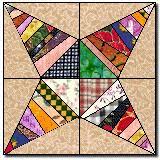
Rocky Road to Kansas uses every tiny piece of fabric left over from clothing construction, illustrating the hardships and frugality of the pioneers.
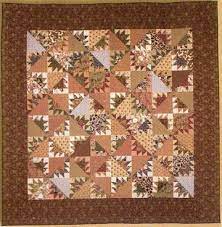
Kansas Troubles is prickly and has two sides–reflective of the period in the states history known as “bloody Kansas” .
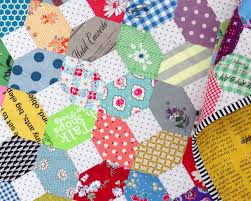
Kansas Dugout is simple with a small center, appealing to quilters who lived in or remember living in cramped sod homes. This block is also known as Grandmother’s Dream, Church Windows, Going Home etc.
The Kansas City Star was famous for hundreds of quilt block patterns printed with instructions and templates for free during the depression and WWII ! To read more about the paper’s pattern go to https://quiltmuseum.org/kcstar/. I have an envelope of fragile, yellow patterns my grandmothers cut from the paper–I inherited my tendency to collect more patterns than I will ever possibly make!
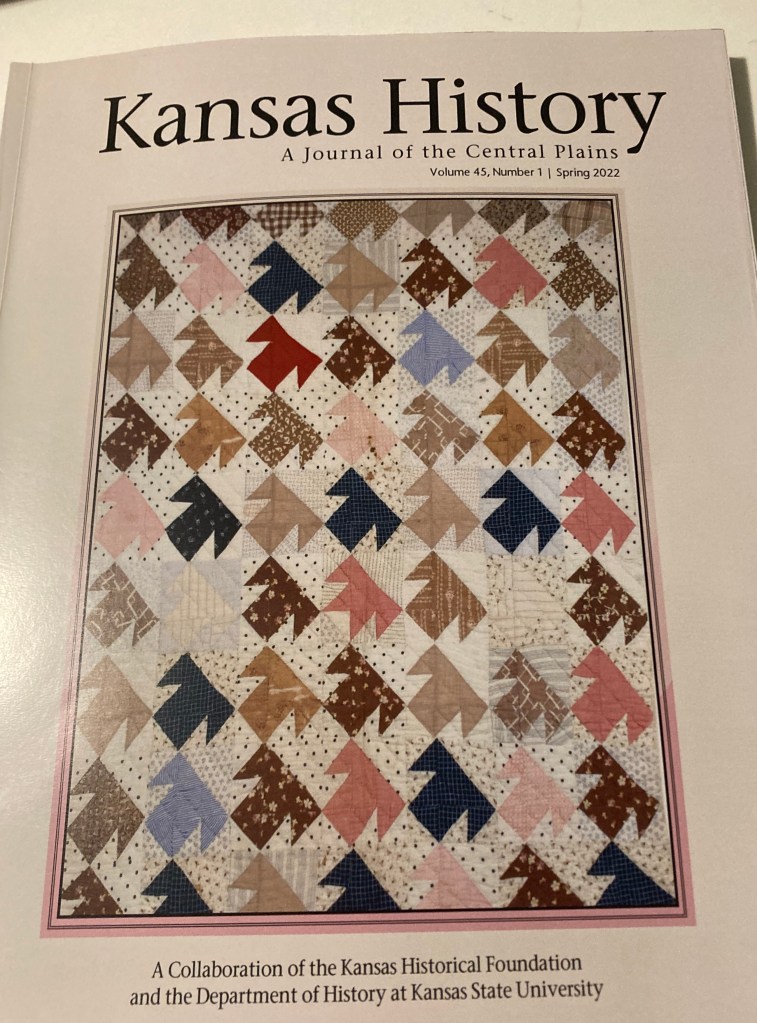
The current issue of KANSAS HISTORY featured the Temperance Quilt block. Women fighting the sale and manufacture of beer and spirits created a block to promote their cause. Often the women paid a nickel or dime to have their name embroidered on the block as a fund raiser.
Currently, quilters are creating quilts featuring sunflowers, the national flower of Ukraine, to show support and/or to raise funds for different refugee charities.
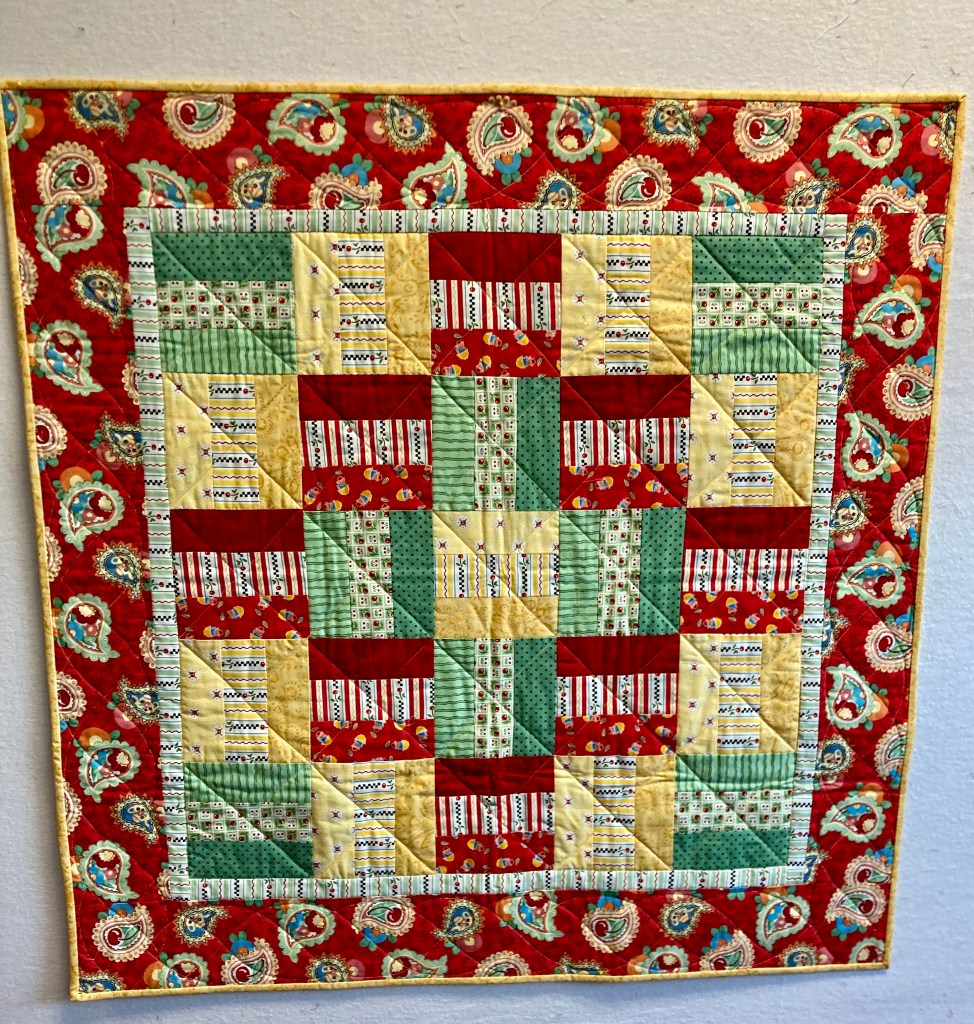
We have many quilted projects using the “tried and true” blocks—-
The Log Cabin is one of the oldest and there are many variations of the block.
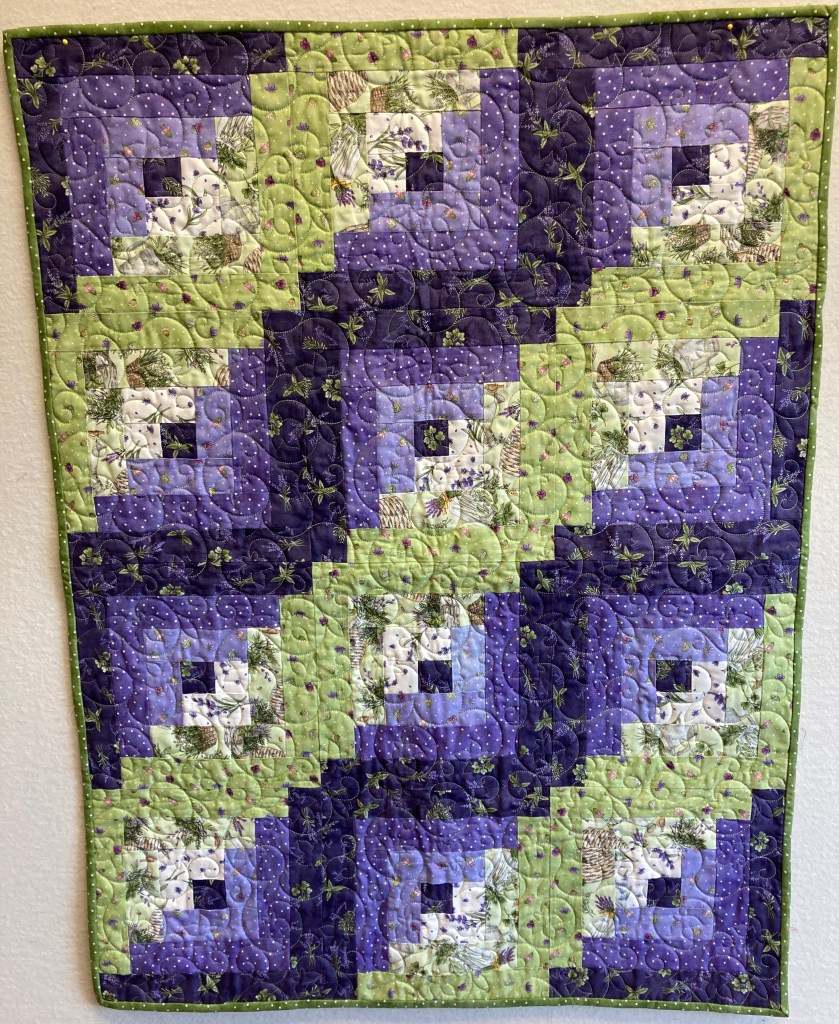
A traditional Log Cabin in rich greens and purples was made by Vicki. It is 28″ x 38″ and is $50.
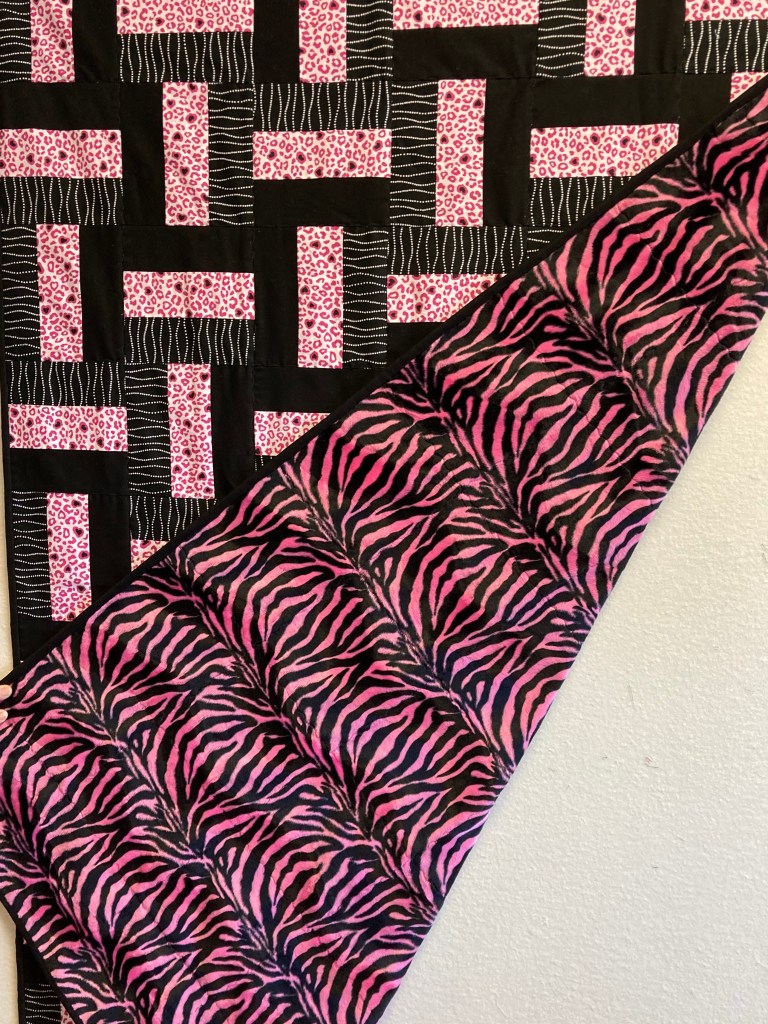
Rail Fence is very popular; the three rectangles reminded pioneers of enclosures using three split logs interlaced with three other logs. This pattern also has many variations.
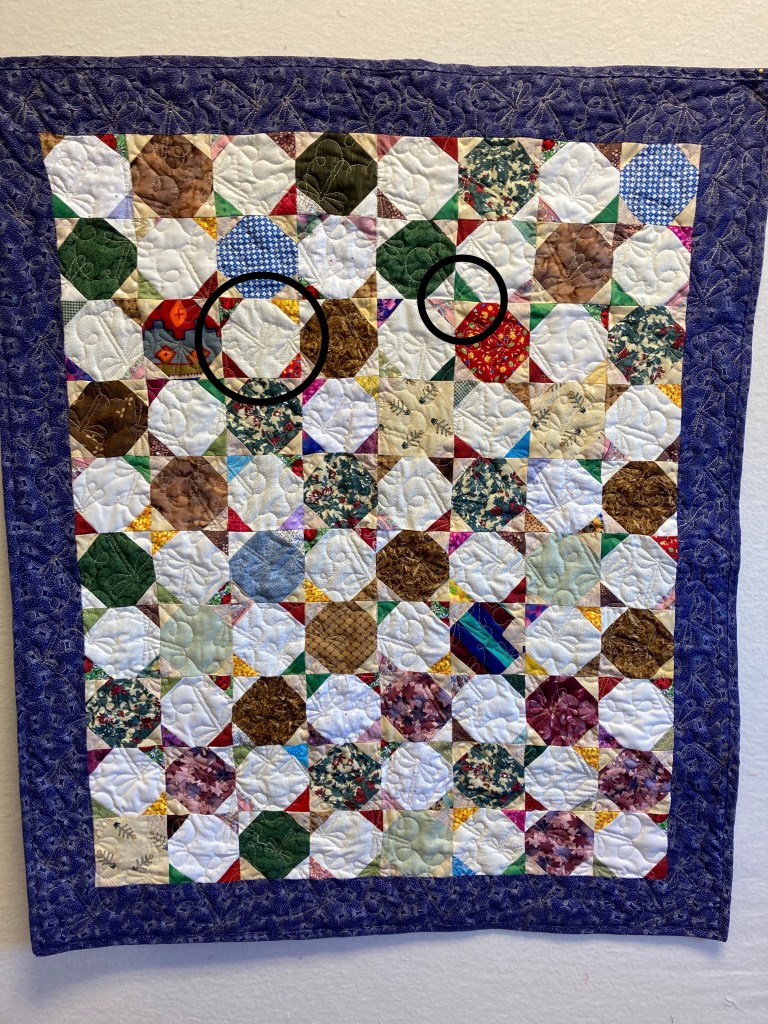
This scrappy quilt used the Snowball block–a simple block but the use of color and prints make it appear more complicated. The corners of the snowballs form a secondary pattern–an Hourglass. The quilt measures 37″ x 42″ and is for sale for $50.
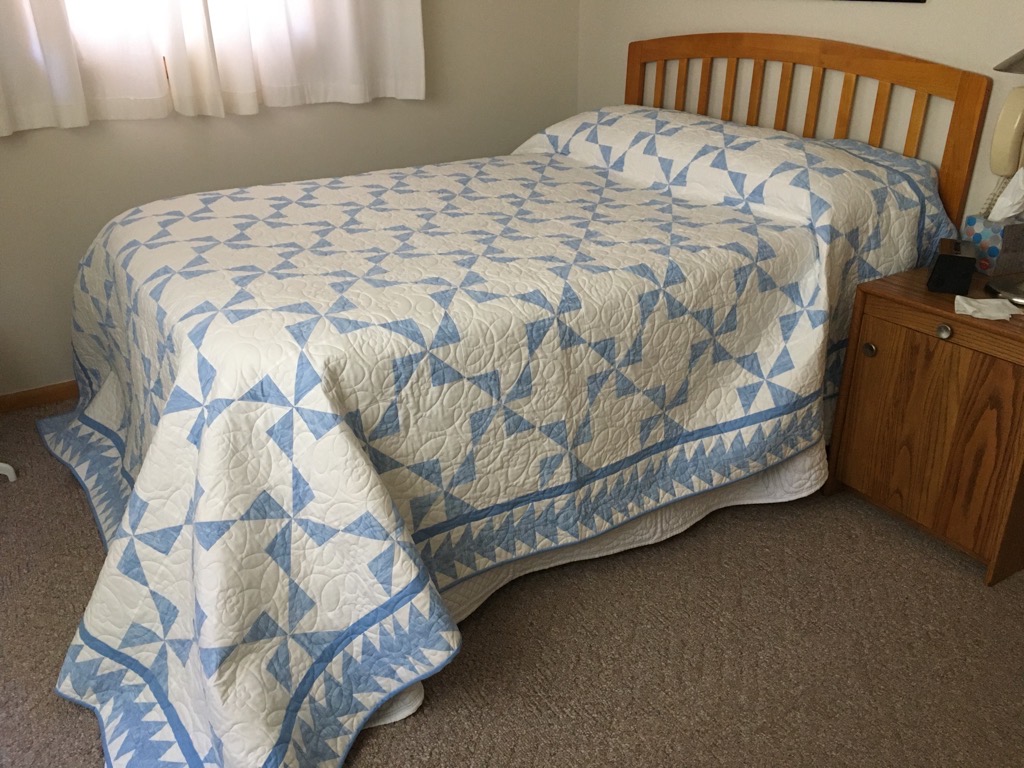
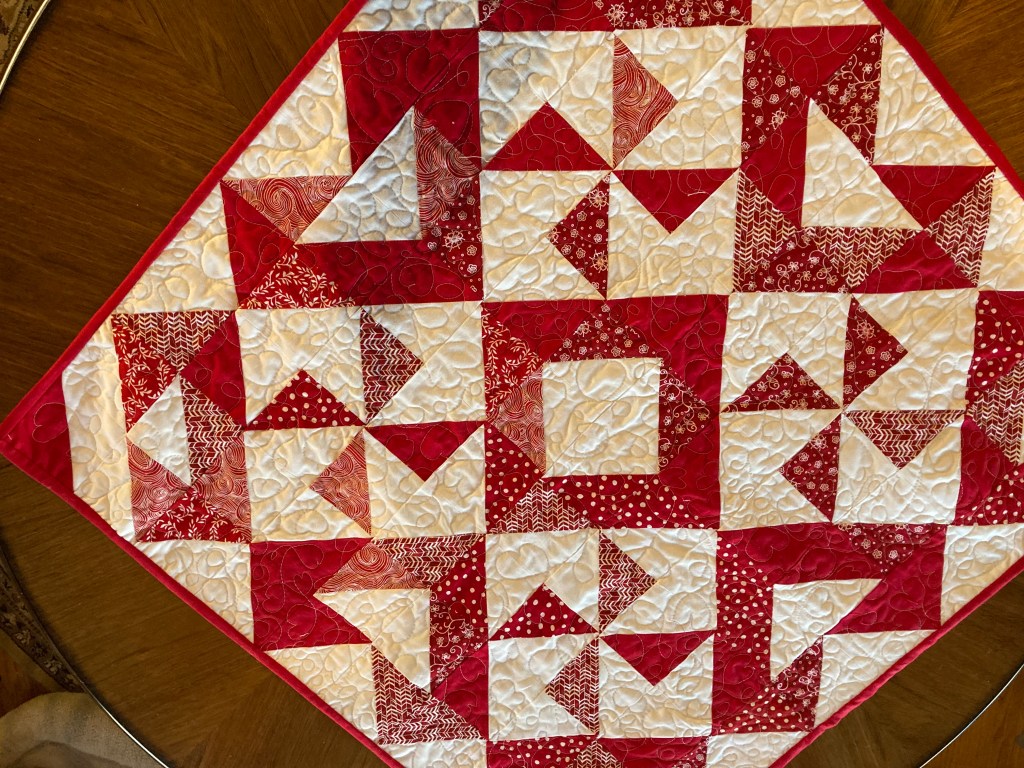
Pinwheels are basically half-square triangles set to create a sense of motion.
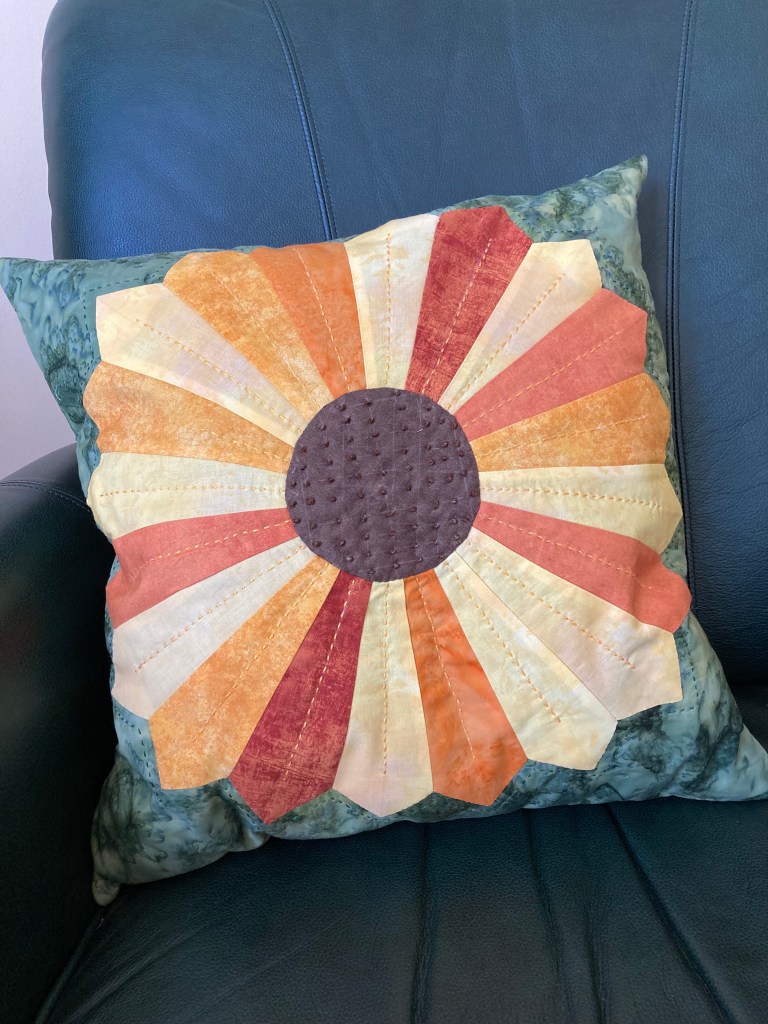
This pillow top is an adaptation of the Dresden Block and uses wedges. It was The number of wedges is dependent upon the width or angle. Originally this block was named after ornate china from Dresden, Germany. It became popular in the late 1800’s.
This pillow measures 18.5″ x 18.5″ and is $30.
This is just the “tip of the iceberg”. Amazon has hundreds of quilt block reference books. Flowers, stars, animals, places, people, Bible stories, food, transportation–all are the source of names for quilt blocks. Just add your twist and you can name it!
Shoppers do not need to wait until October and the Quilt Sale. All items are for purchase now. Please contact me via the comments section of this post.
 Quilts, Etc.