Did you know that tomorrow is National Quilting Day? Like any holiday, it is observed many different ways. Local quilt shops may have special sales. Some well- know bloggers, fabric designers and pattern creators have “give aways” or drawings. Some guilds promote hanging quilts from porches or having quilt shows in public parks or gardens.
The National Quilt Museum (NQM) organized an international contest of originally designed quilts based on the Roaring Twenties and a traditional block pattern to celebrate National Quilting Day. If you are lucky enough to be in Paducah, Kentucky-home of NQM, anytime before the first of August you can see the winning entries along with other awesome exhibits.
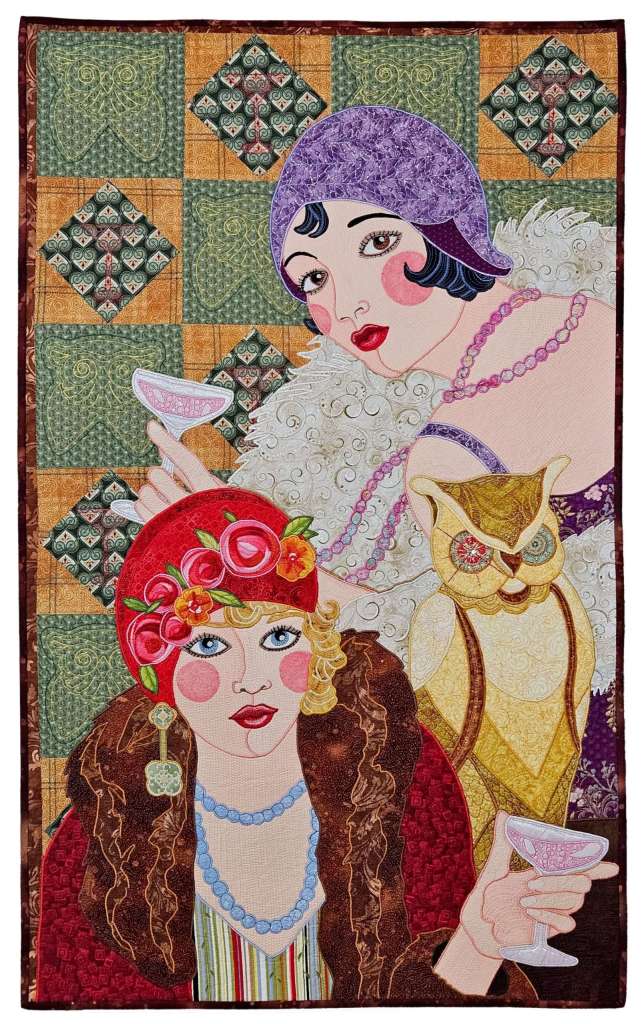
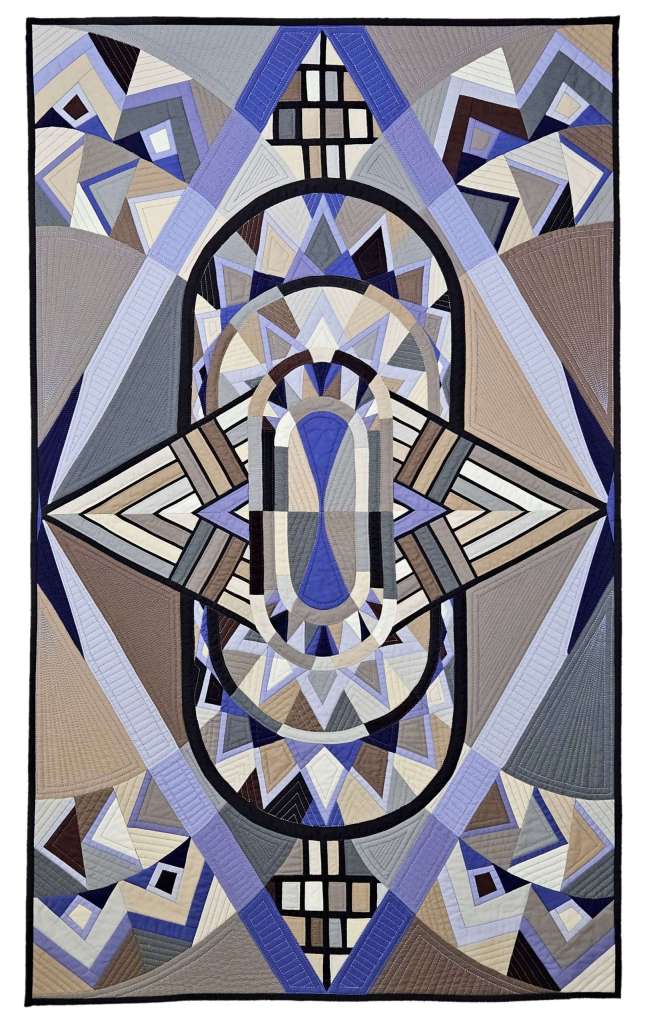
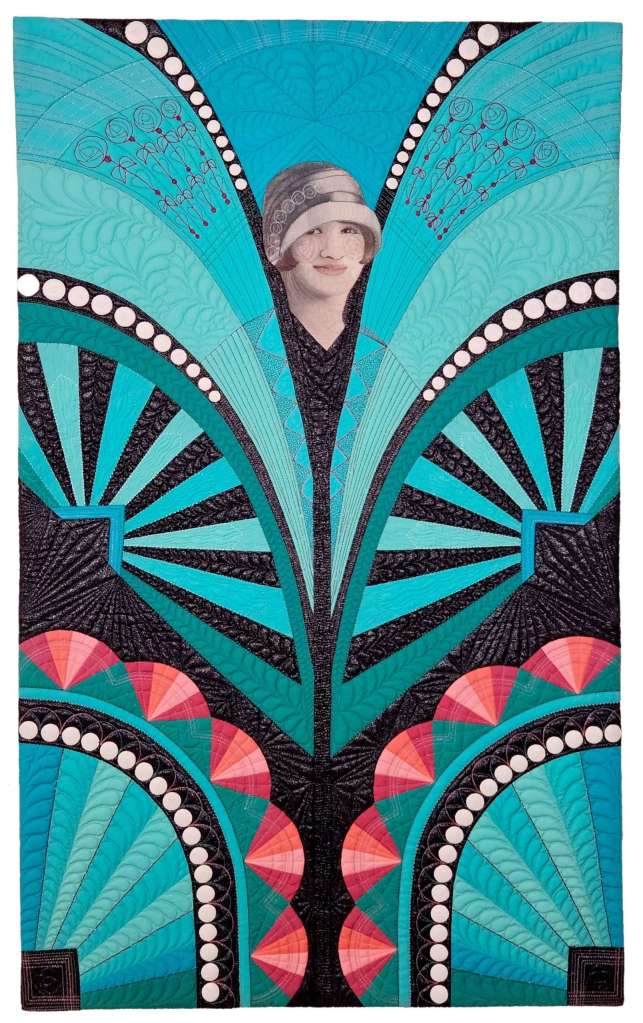
(The winners in the Roaring Twenties 2024 quilt contest)
When I was doing some internet searching about National Quilting Day, I discover a fascinating quilting group—the Quilt Alliance, a non-profit organization “with a mission to document, preserve and share our American quilt heritage by collecting the rich stories that historic and contemporary quilts, and their makers, tell about our nation’s diverse peoples and their communities”. This group recognizes quilt making as an “important American grassroots art form”. This group has over 1,200 recorded quilt interviews and stories and over 60,000 quilts documented! Printed interviews may be found on their web site, quiltalliance.org. But what I found most helpful was the page labeled “Three Key Steps to Documenting a Quilt”.
My husband is a dedicated genealogist for his and my families. He has collected reliable birth and death dates. He has dates of weddings, military service and careers. But I tell him over and over, it is the stories about these people that are important; that will keep our ancestors alive in our memories. We quilters have histories and stories we need to document. Documented quilts will be invaluable to future generations with whom we want to connect and add personal ties to those heirlooms.
Here are the three steps—if you made the quilt, purchased the quilt or was gifted the quilt.
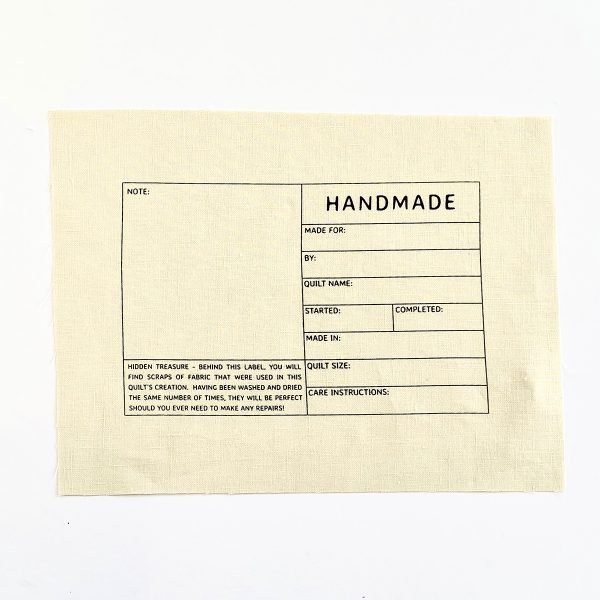
- Label the Quilt. At the very least include the maker, the date and the occasion–wedding, birth, graduation. The label in the photo asks for many more details. If it is a gift or made to be sold, care instructions are helpful. Look on Pinterest —there are hundreds of label examples. AND if your gifted or purchased quilt did not come with a label, you can make one or request one made.
2. Take photos of the quilt–front and back and if possible with the maker. I was gifted the Sunbonnet Sue blocks from a member of our extended family. We don’t know who made the blocks but the fabric used dated back to the 30’s. The appliqué was so well done that I felt it had to be hand quilted. This is a photo of the three hand quilters with the finished quilt. Persons who purchase quilts at our Quilts Etc. Sale often want to know who made the quilt..is it one of their church or book club or neighborhood friends? I am going to start offering to take a photo of the maker with the quilt.

Step 3–Write down your quilt’s story. This might take time when you would rather be sewing! But just imagine how excited your great granddaughter would be to read why you chose the pattern and color combination of her inherited quilt.
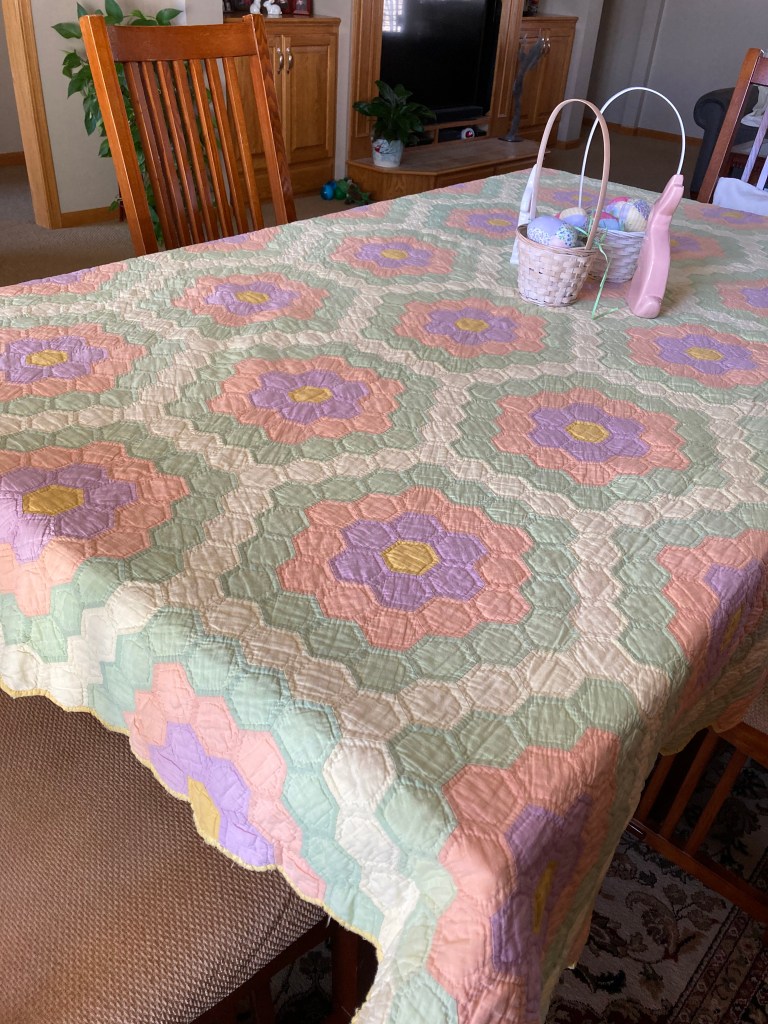
I purchased this quilt at a farm sale. The owner did not know where and when his late wife had purchased the quilt. Every spring when I bring this “flower garden” out, I wonder about the maker. It isn’t a scrappy quilt–the fabric was purchased especially for this quilt. But the fabrics suggest it was between the 1920-1940s, when many experienced financial hardships. What was the occasion? Was it in a “Hope Chest”? Did a group of quilts meet weekly around a frame to hand stitch around each hexagon?
For each quilt, include at least the date, maker, occasion, the pattern’s name, the fabric and batting used, care needed and any special story that goes with it. For example, why is there a National Parks Panel in the back of this quilt?


The quilt was made for my oldest grandson–we spent hours picking out the green fabrics for the pattern he had selected. As we were leaving the quilt shop, he noticed the National Park panels for sale. He had to have it in his quilt. Really? The compromise was to include it on the back. That story needs to be included in the documentation of this quilt, otherwise the nod to National Parks might seem a bit odd.
Confession is good for the soul–right? I haven’t been good about documentation. In fact, I feel very hypocritical writing this post. Maybe I have convinced myself to do some recording of quilt information in honor National Quilting Day..maybe.
************************************************************************
New projects for Sale:
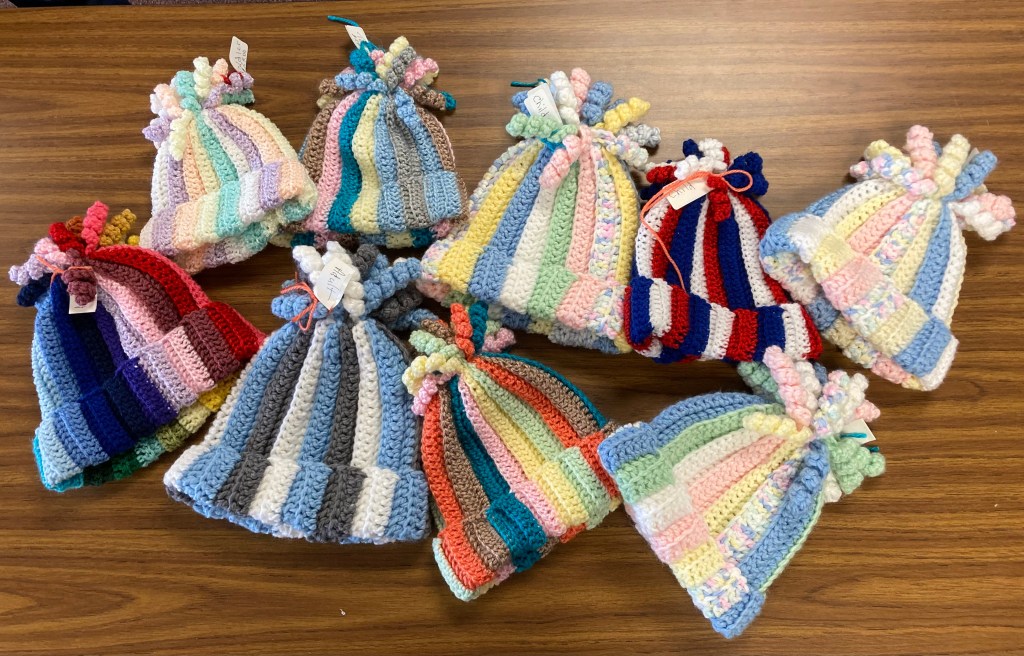
Hand crocheted hats in all sizes–from infant to adult. $25 each. The maker has promised to make more, so keep watching for new color combination.
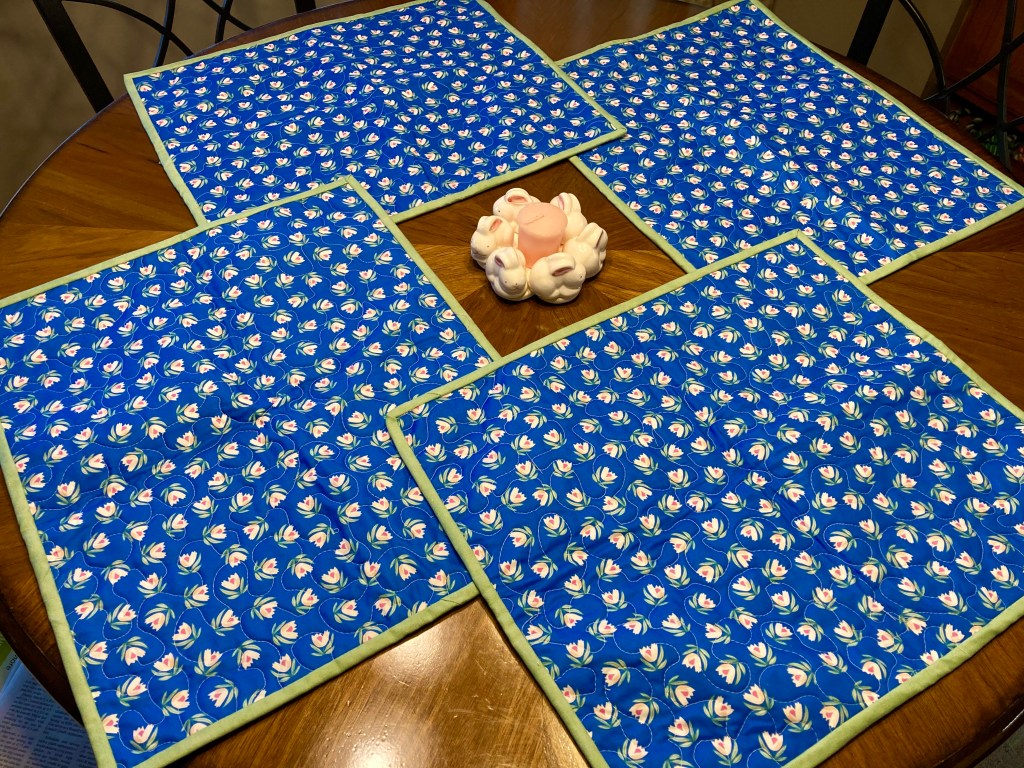
Tulip print placemats. Approximately 15″ x 18″. Back is pink gingham print. Machine quilted and washable. 4 for $40.

Another muslin –all cotton tea towel with hand embroidered design. $8
Carrot tablerunner—$35.


Baby quilt –40″ x 40″. $55
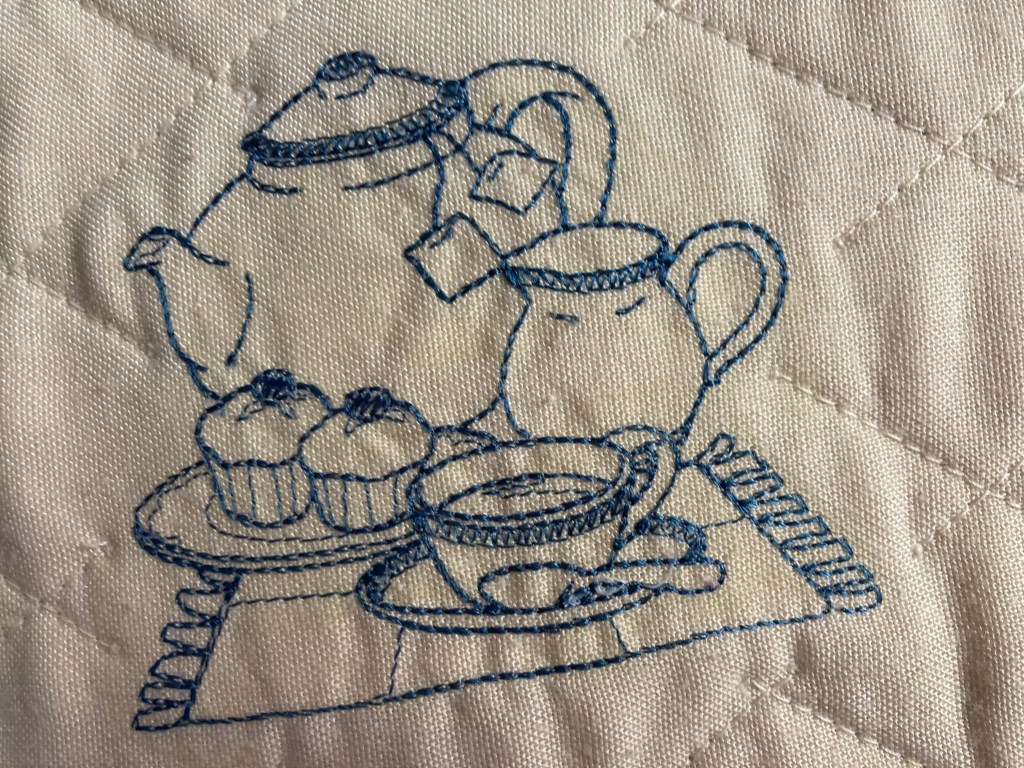
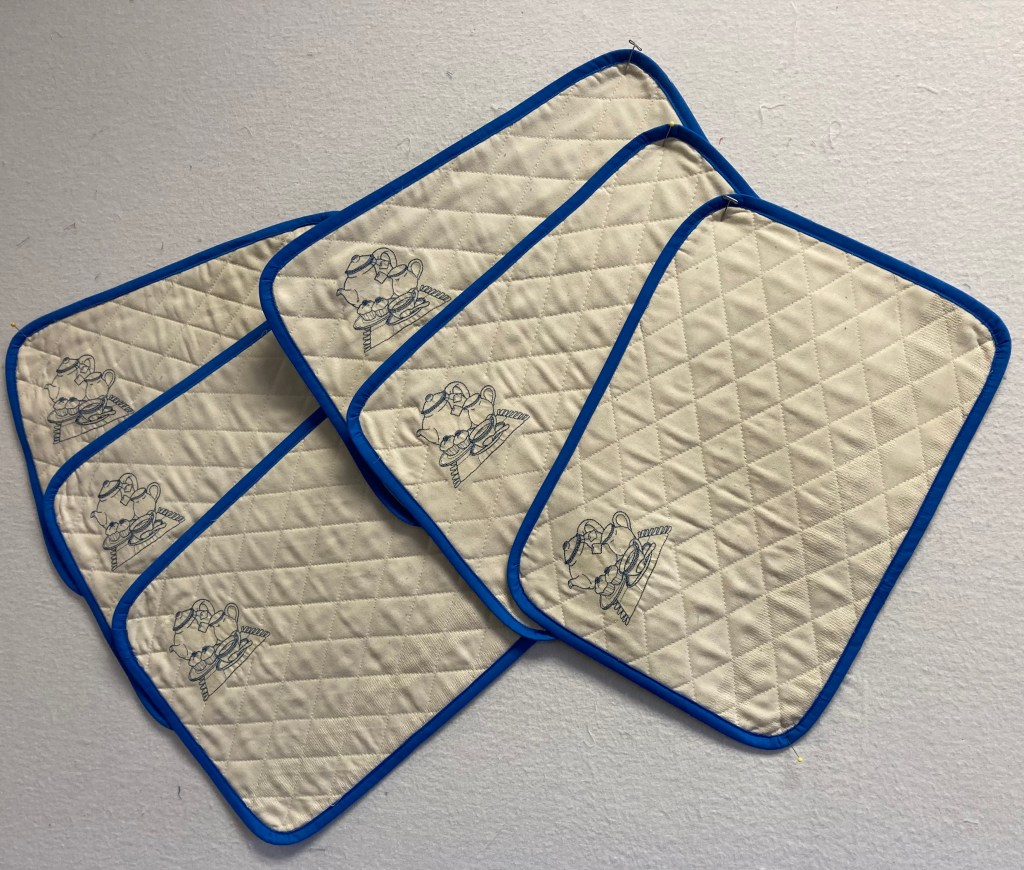
Six placemats with machine embroidered design in upper left corner. From is textured linen look fabric. 6 for $60
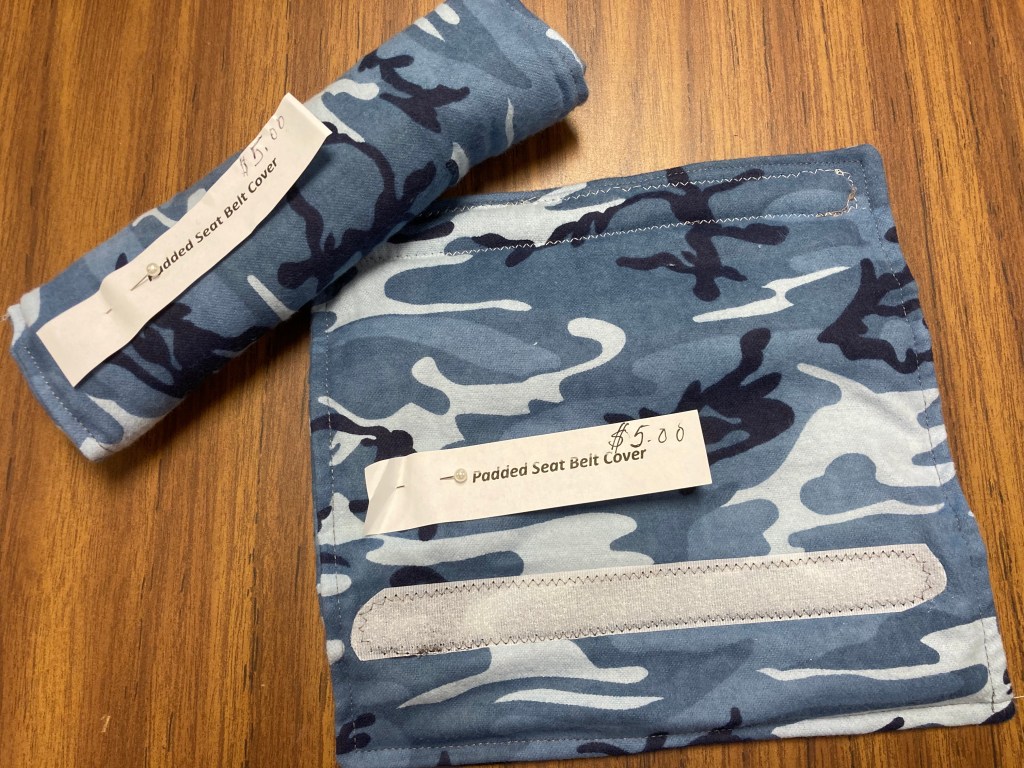
Flannel seat belt covers—recommended by one of quilters for short people. $5 each
Tons of scrubbers–one side is net covered. $2 each
Happy National Quilting Day! Hope you get to sew or at least “pet” your favorite quilt!
 Quilts, Etc.